04Service
Calculation and simulation
We analyse, calculate and optimise.
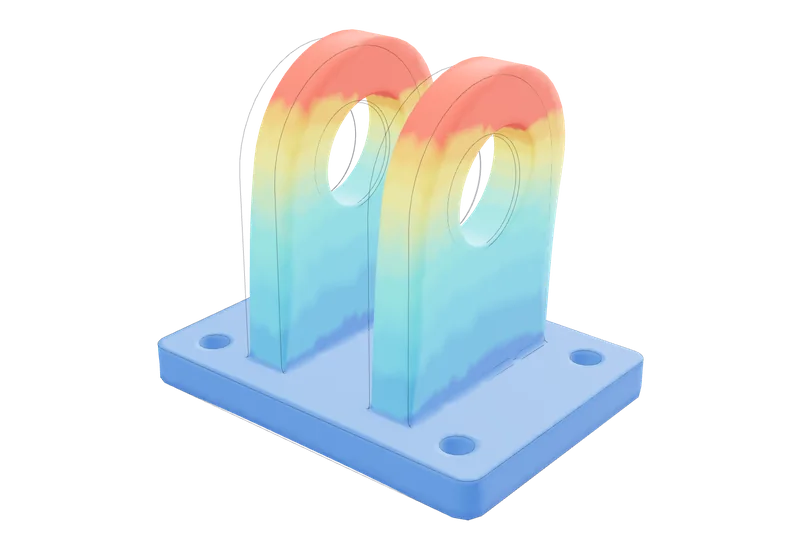
We assess the mechanical and structural behaviour of components under different operating conditions, using analytical calculation and finite element analysis.
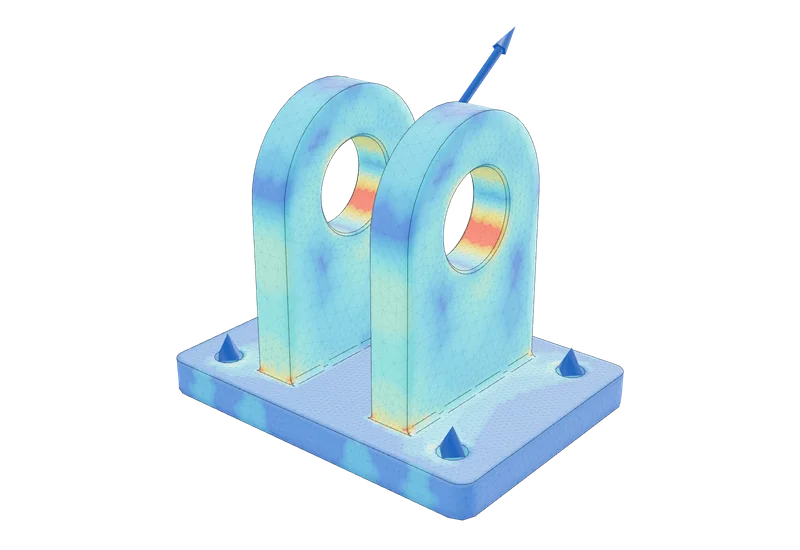
We calculate stresses, deformations and safety margins for parts and structures.
Doubts about whether a component will hold, recurring breakages and oversized designs.
Design decisions based on calculation, documented in a technical report.
Analysis example
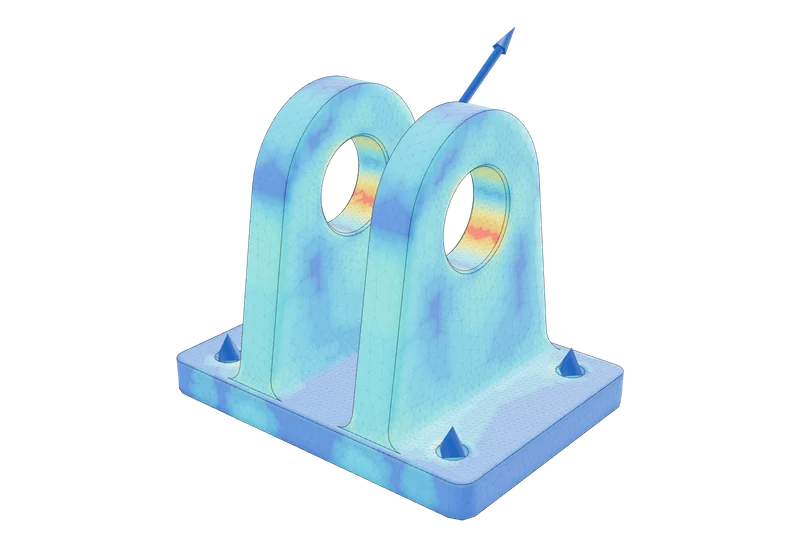
Initial design versus optimised design
The same clevis, with the same load and the same colour scale. Drag the slider to compare: the optimised version widens the base of the lugs and increases the fillet radius at the plate.
Assumptions in the example
- Linear elastic material (steel), small deformations.
- Bolted plate: fixed bolt holes and support on its underside.
- Pin pull inclined at 55° to the vertical, transmitted as contact pressure.
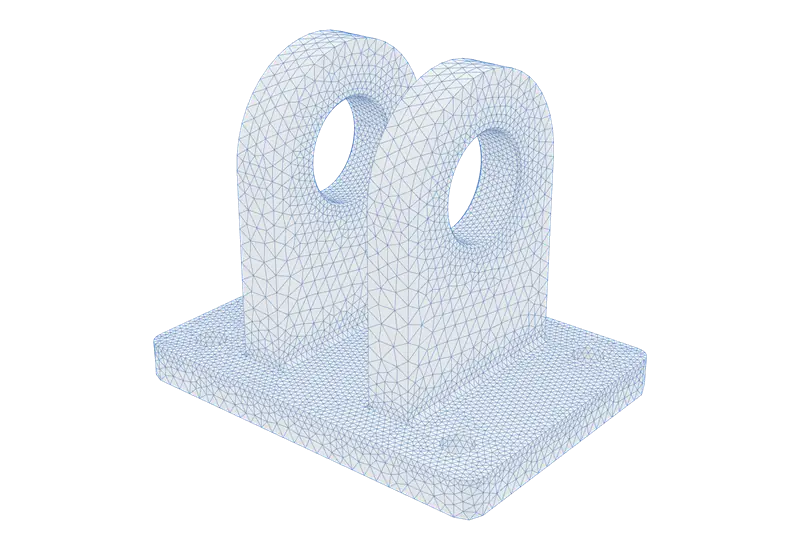
- Quadratic tetrahedral elements.
This is a generic part, prepared and calculated by ARVEX solely to illustrate the service. The results are shown normalised, without figures, because they do not correspond to any real case. In a project, the results depend on the assumptions, the boundary conditions and the model used, and are documented in the report.
Capabilities
Calculation to validate, compare and optimise
- Mechanical calculations
- Structural calculations
- Finite element analysis (FEA/FEM)
- Stress studies
- Deformation assessment
- Load analysis
- Safety factors
- Geometry optimisation
- Material selection and comparison
- Technical reports
Applications
What we calculate
- Crane and lifting components
- Structures and frames
- Lugs and lifting points
- Special transport adaptations
- Parts that fail in service
- Redesigns before manufacture
Benefits
Knowing, not assuming
Where the part is working, how much margin it has and what changes if it is modified.
Less material, same job
Optimisation can reduce weight and cost without compromising function.
Traceability
Assumptions, model and results set out in a report that can be reviewed.
Need to validate a design?
Tell us about the component, the loads and what you need to check.